


Ukraine remains the most mined country in the world. According to various estimates, approximately half a million hectares of Ukrainian forests are contaminated with explosive objects and pose a potential threat to foresters, local communities, and forest visitors.
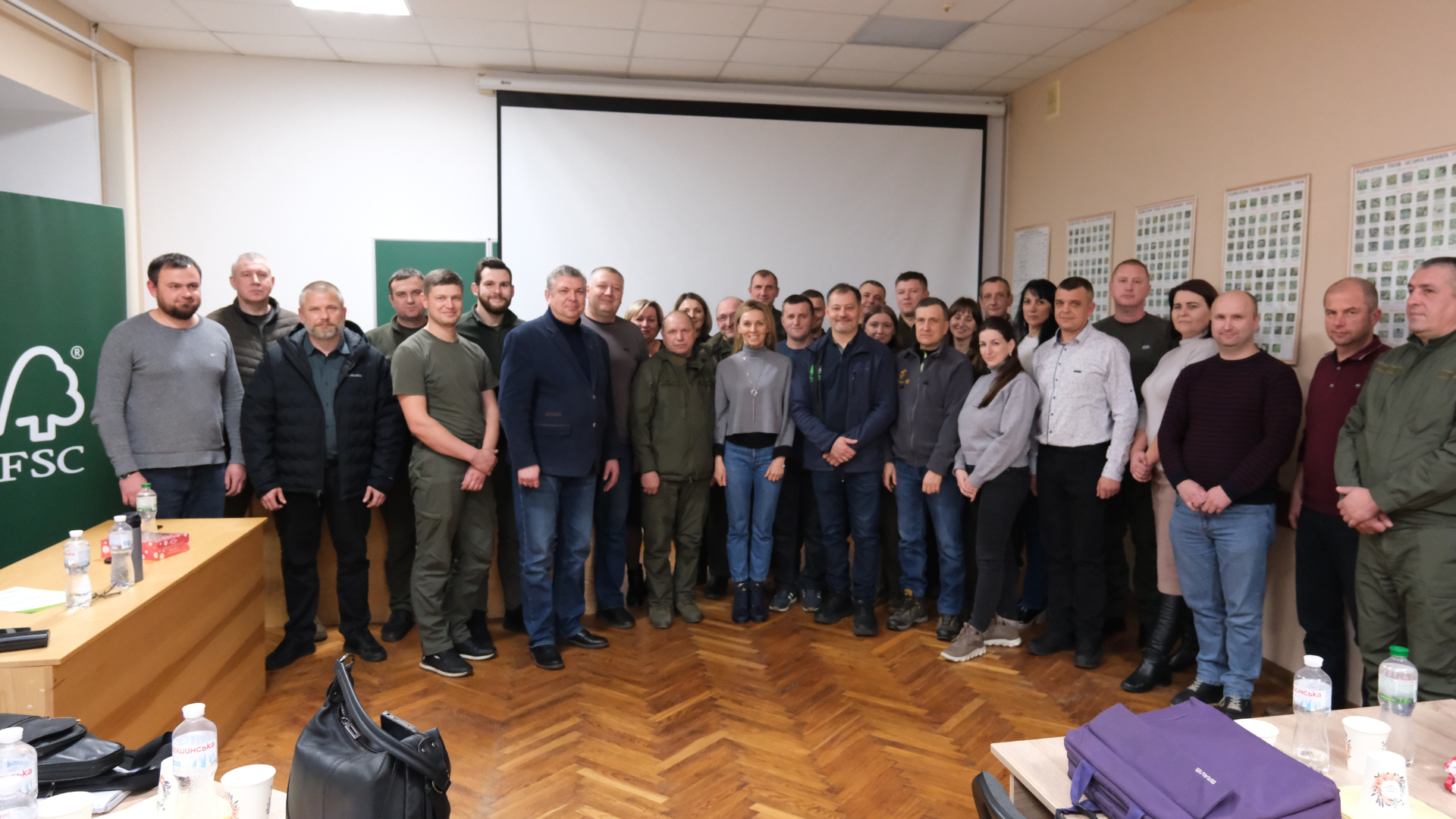
On 16 December 2024, FSC Ukraine held a training session entitled "Exclusion of areas contaminated by explosive objects from the scope of certification: FSC standard requirements for forest management in Ukraine". The event was aimed at employees of forestry enterprises, in particular the SFE “Forests of Ukraine” and the Zhytomyr Regional Municipal Agroforestry Enterprise “Zhytomyroblagrolis”. All those present — representatives of forest management units, regional offices and the central office of SFE “Forests of Ukraine” and representatives of subsidiaries of ZhRMAE — are stakeholders in matters relating to the exclusion of areas contaminated by explosive objects from the scope of FSC certification.
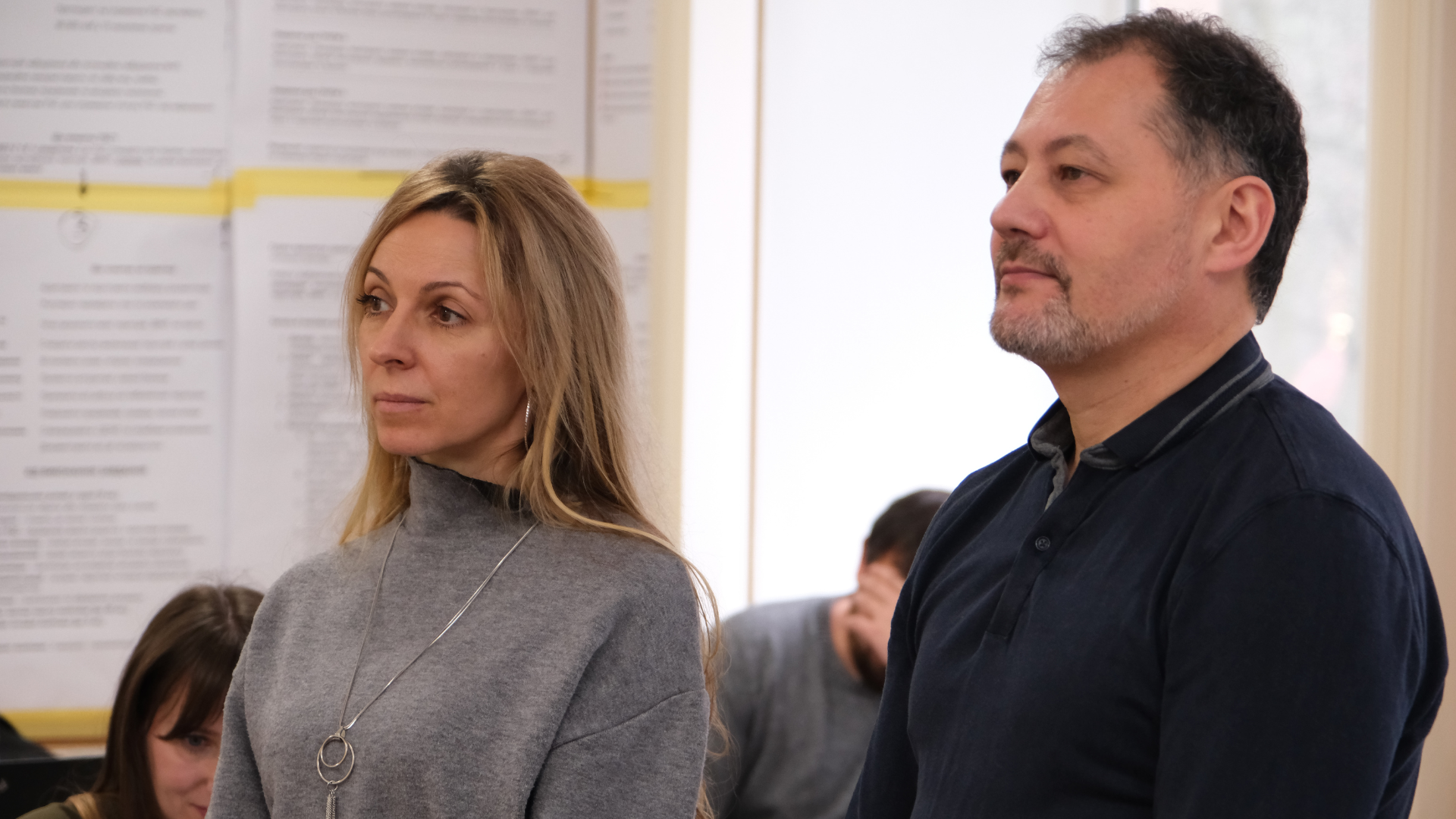
Training experts: Oksana Pavlishchuk and Dmytro Karabchuk
Threats to forests and forestry caused by military conflict have determined the priority for the FSC system: develop rules that protect forestry workers and local communities while maintaining the possibility of certification. That is why the working group on the development and implementation of FSC National Forest Stewardship Standard for Ukraine spent two years developing Annex J to the FSC standard, which was approved at the international level. This document allows excluding parts of areas contaminated by explosive objects from the scope of certification without threatening the ability of the rest of the enterprise's territory to meet the requirements of the FSC FSS for Ukraine.
“The training is very simple and practical,” Dmytro Karabchuk, the executive director of the non-governmental organization ForestCom, explains. He's an expert who led the team that worked on developing the FSC risk assessment and the training programme as a whole. “The Annex contains clear criteria, and we disclose them step by step. We move straight from theory to practice, using specific examples to show how to create policies, strategies, goals, and a vision for the enterprise, as well as a management plan as the main document for verification. We have developed recommendations that training participants can refine and adapt for their own companies.”
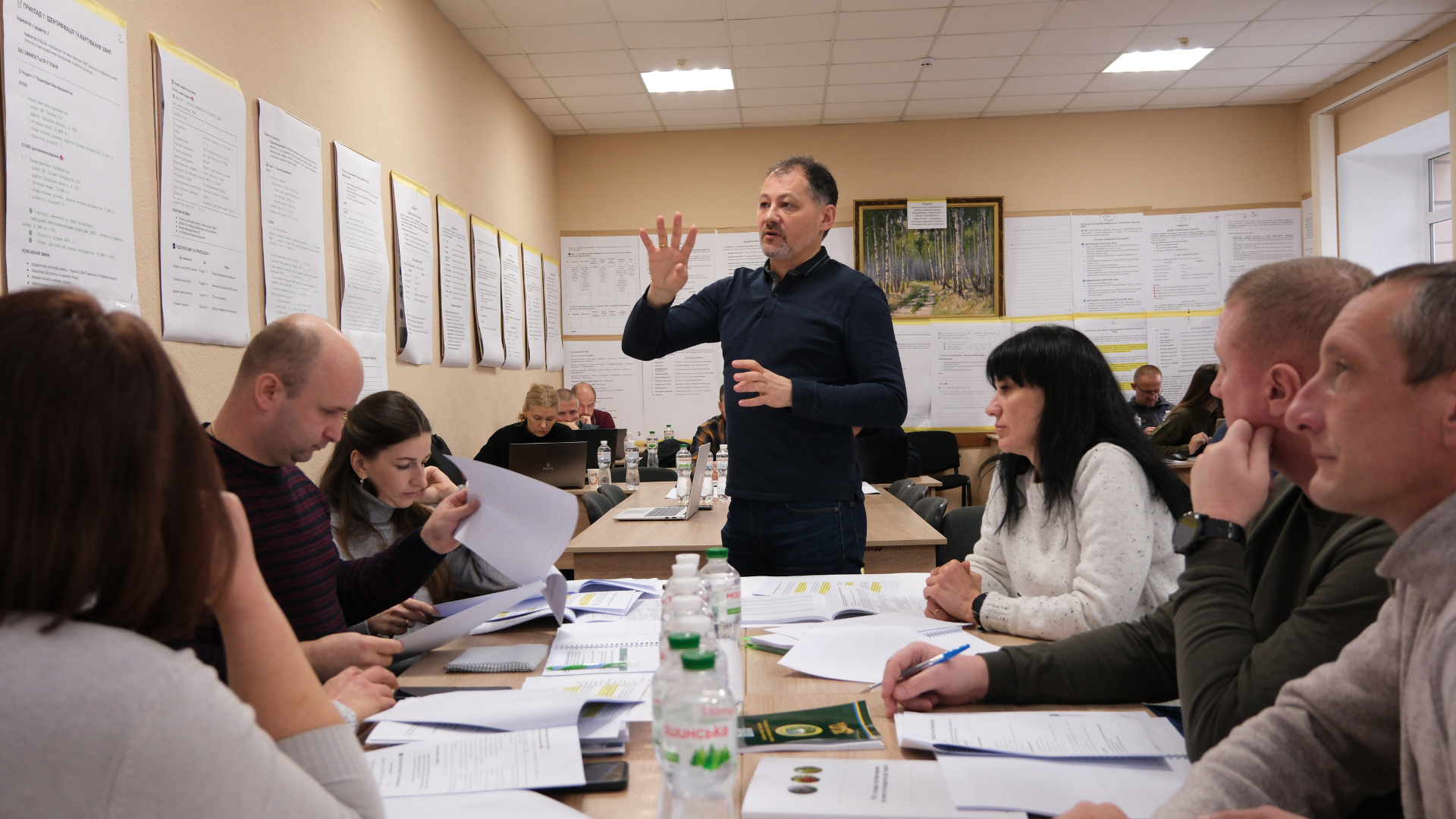
After the theoretical part, participants solved practical tasks.
However, excluding areas from FSC certification entails a number of challenges that go beyond purely technical solutions. "Excluding areas contaminated by explosive objects from the scope of FSC certification is primarily about changes in the management system. In particular, an adaptive approach to forest management is important for responding appropriately to the impacts associated with the presence of such areas. Ensuring the safety of forestry workers, local communities and other stakeholders in the context of existing risks remains a priority in terms of forest certification values," Oksana Pavlishchuk, Associate Professor at the National University of Life and Environmental Sciences of Ukraine and FSC Ukraine consultant, notes.
Dmytro Karabchuk emphasises the critical nature of systemic changes: “Without changing the management system, companies will not be able to operate either in practical terms or in terms of getting certified. The sequence of actions follows from the requirements of Annex J. Companies need to identify specific areas of work, understand what is written in the Annex, and which requirements it imposes on them. They must adapt their management practices to take these requirements into account. If they are unable to do so, they will not be able to obtain certification and will not even be able to begin the certification process.”
In total, approximately three million hectares of Ukrainian forests have been affected by the full-scale invasion, and the area of forests where economic activity can be carried out has been reduced by 20 per cent. However, there are enterprises where the land area of contaminated territories does not exceed five per cent of the total area, and theoretically it can be excluded from the scope of certification. However, the actual requirements for such sites are very similar: people cannot work there, the land area shall be clearly demarcated, and all impacts shall be assessed to ensure the safety of workers and local communities.
Sergii Rozvod, director of the auditing company Legallis LLC, draws attention to a common misconception about certification: some forestry enterprises believe that only the safe part of the area can be certified, while the rest, where the danger remains, can be used for forestry operations without including it in the certification process. But this would be a violation of the FSC FSS for Ukraine. The FSC clearly states that it is not possible to be certified and violate the requirements of the Standard within the same organization at the same time. The Standard shall be adhered to in all areas of the enterprise.”
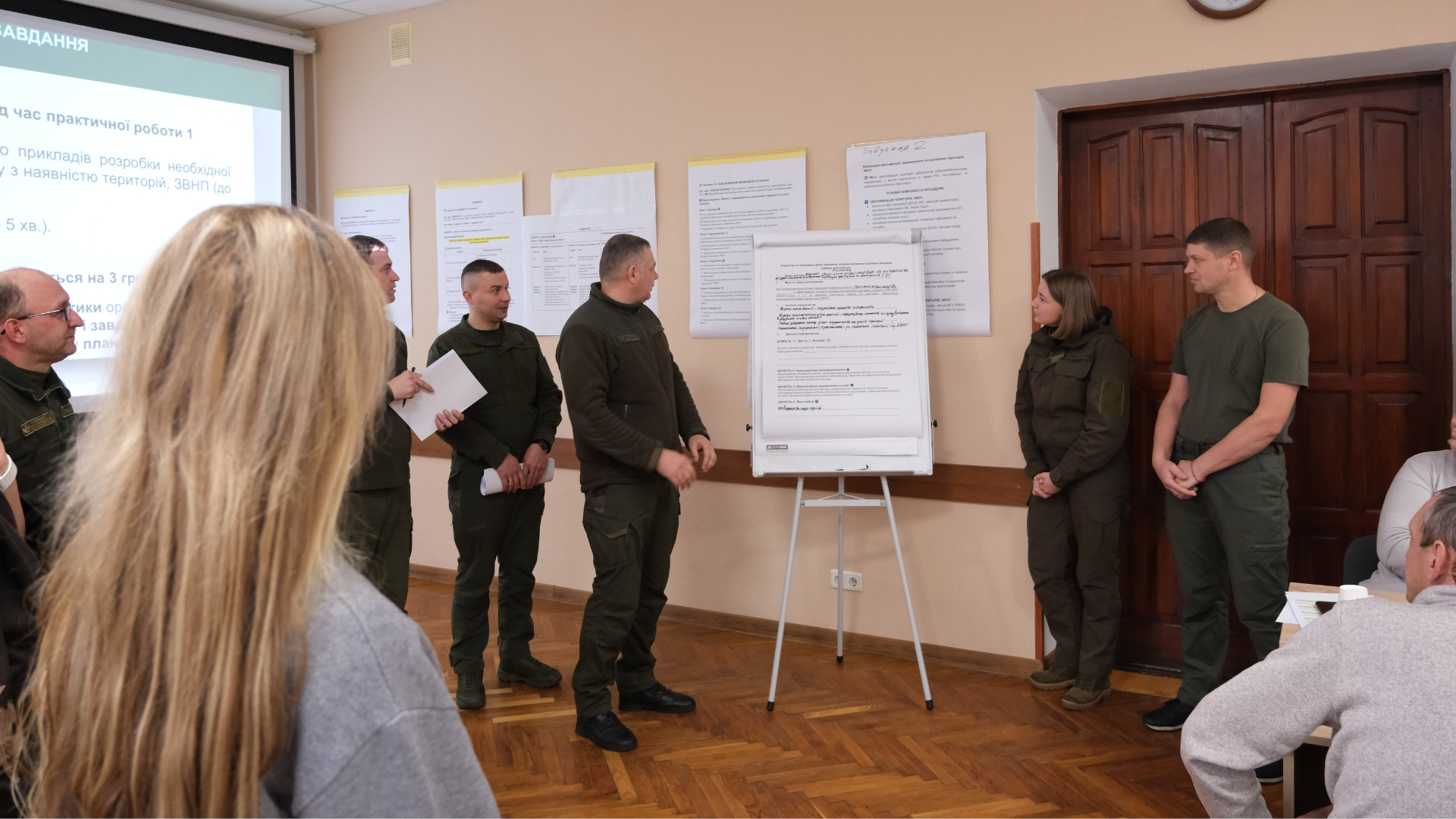
The participants of the training justified their work
Despite the difficult and often changing situation, especially in frontline areas, there are companies that are ready to join responsible forest management. The state provides similar incentives. The government decision provides for a 10% increase in the area of PEFC and FSC certified forests between 2025 and 2027. Enterprises facing threats of martial law have the opportunity to renew their certification. To this end, FSC Ukraine has created an effective tool – Annex J, which allows areas contaminated by explosive objects to be excluded from the scope of certification. And thanks to such training, interested stakeholders learn how to do it correctly.
The organisers and experts of the training are convinced that: the insight into the structure and features of Annex J will help the participants to boost their confidence in the practical implementation of its requirements, while the FSC, by creating a platform for like-minded people and continuously educating stakeholders, is helping to change the philosophy and approaches to responsible forest management.
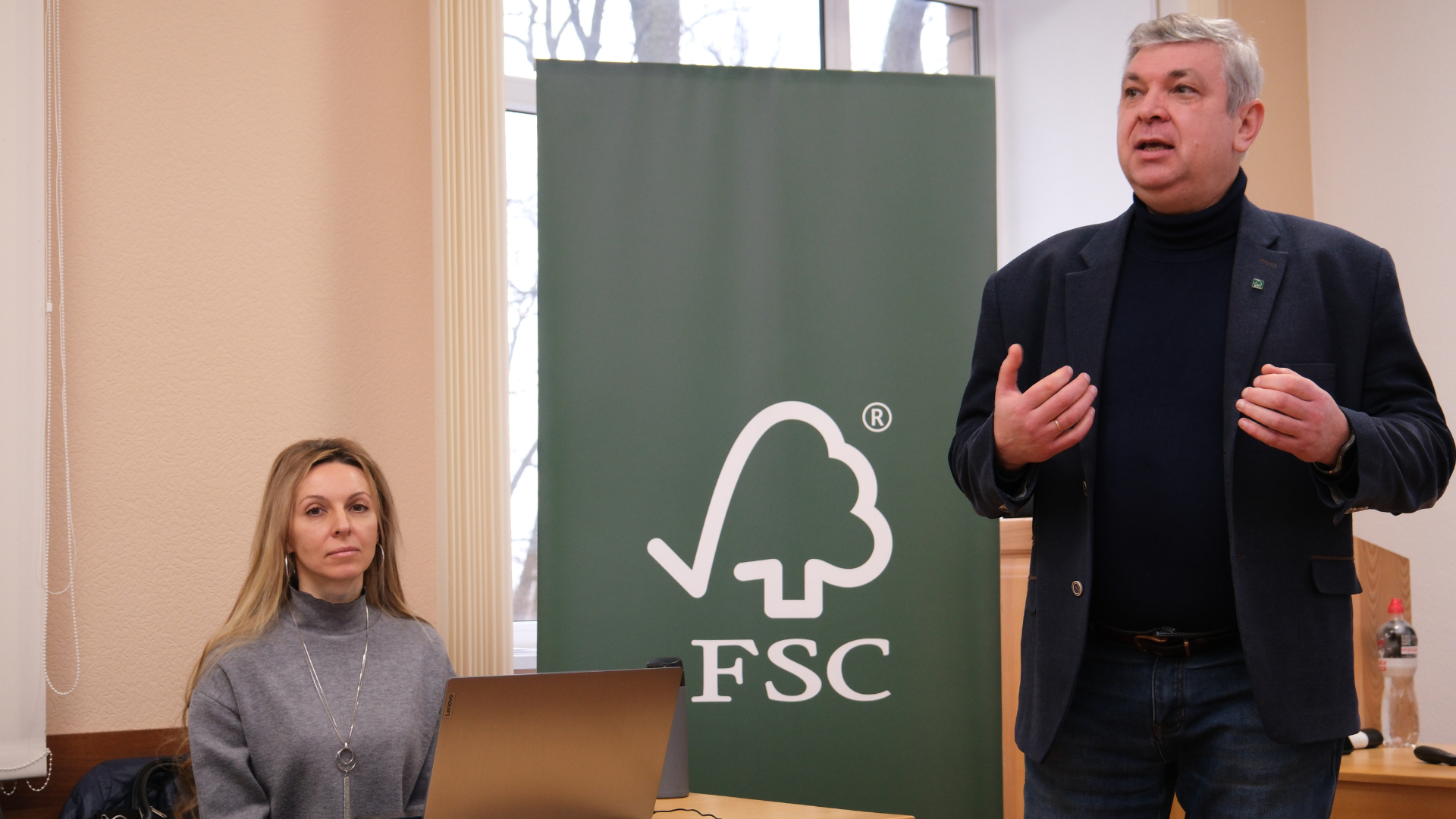
"FSC has once again demonstrated that it remains a leader in implementing the most complex solutions for ensuring responsible forest management in extraordinary conditions, in particular, situations involving areas contaminated by explosive objects. We not only set new safety standards that take into account the challenges of war and encourage their consistent implementation, but also provide the forestry branch with the tools to implement them, shaping the framework for the activities and development of the forestry branch as a whole," Pavlo Kravets, FSC Ukraine National Representative, concluded.
FSC Ukraine training demonstrates progress in approaches to forest certification in wartime conditions. Annex J to the FSC standard for Ukraine is not just a procedure, but a comprehensive risk management system that ensures the integration of employee safety issues into the strategic processes of the enterprise. Ukraine's experience in adapting the FSC FSS for Ukraine to the realities of land areas contaminated with explosive objects could set an important precedent for other post-conflict regions of the world where forestry faces similar challenges.